A-ROK
The Format 01 Chapters 02 Events 03 Charter 04 About 05 Join A-ROK
The Standard — v4.1

The format

Eight kilometres of running, split by eight work stations, against one continuous clock. Published in full, free to read, and identical in every chapter on earth. Nothing here is behind a paywall or a membership tier.

01 — Structure

Run one. Work one. Repeat eight times.

The order never changes. You always run before you work, and the clock does not stop between them — transitions are part of your time.

01

SkiErg

Double-pole ergometer. Handles must return above head height each stroke.

1,000 m
after 1 km run
02

Sled Push

Sled crosses the far line in full. No riding, no throwing the finish.

50 m
4 × 12.5 m lanes
03

Sled Pull

Rope hand-over-hand from inside the box. Feet stay behind the line.

50 m
4 × 12.5 m lanes
04

Burpee Broad Jump

Chest and thighs touch the floor. Two-foot take-off, two-foot landing.

80 m
continuous lane
05

Row

Seated ergometer. Damper is your choice; the distance is not.

1,000 m
after 1 km run
06

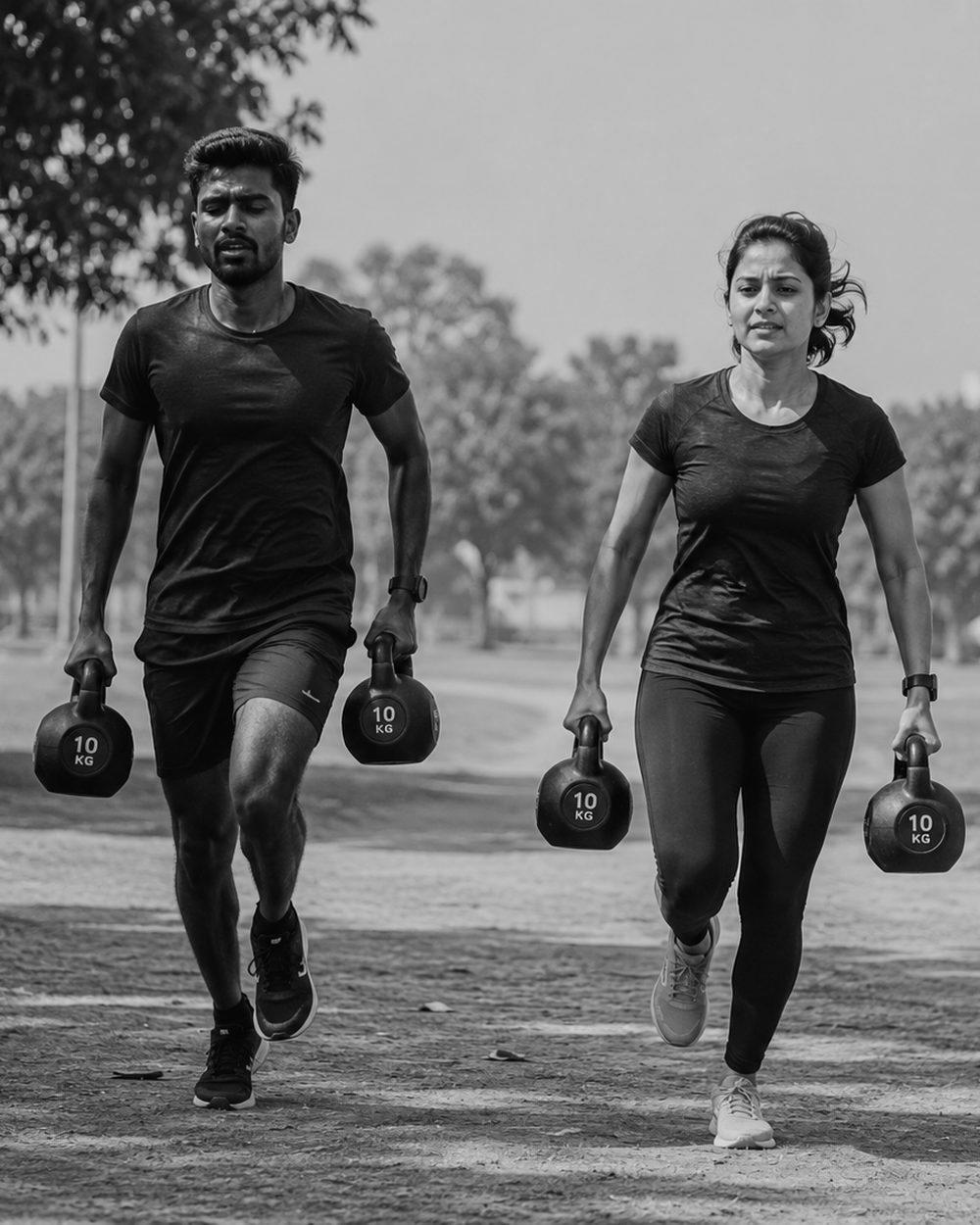
Farmers Carry

One kettlebell per hand. Set down where you like — the clock keeps running.

200 m
2 × 100 m
07

Sandbag Lunges

Bag on the shoulders. Trailing knee makes contact with the floor each rep.

100 m
2 × 50 m
08

Wall Balls

Hip crease below knee at the bottom. Ball hits the target on every rep.

75 / 100 reps
by division

Total running distance: 8 km. Judges call no-reps on standard, never on speed. Every standard on this page is public precisely so that no chapter can invent a stricter or looser version for its own members.

02 — Divisions

Seven ways in. None of them lesser.

Divisions exist so the standard can meet different bodies and different starting points — not to sort people into a first and second class. Every division is ranked, recorded and awarded the same way.

Open

The default entry. Standard sled loads, wall-ball target at 9 ft / 10 ft, 75 reps. If you have never done this before, this is your division.

Solo75 wall balls

Pro

Heavier sleds, heavier carries, 100 wall balls. Qualification is by a published Open time, not by invitation, sponsorship or who you know.

Solo100 wall balls

Doubles

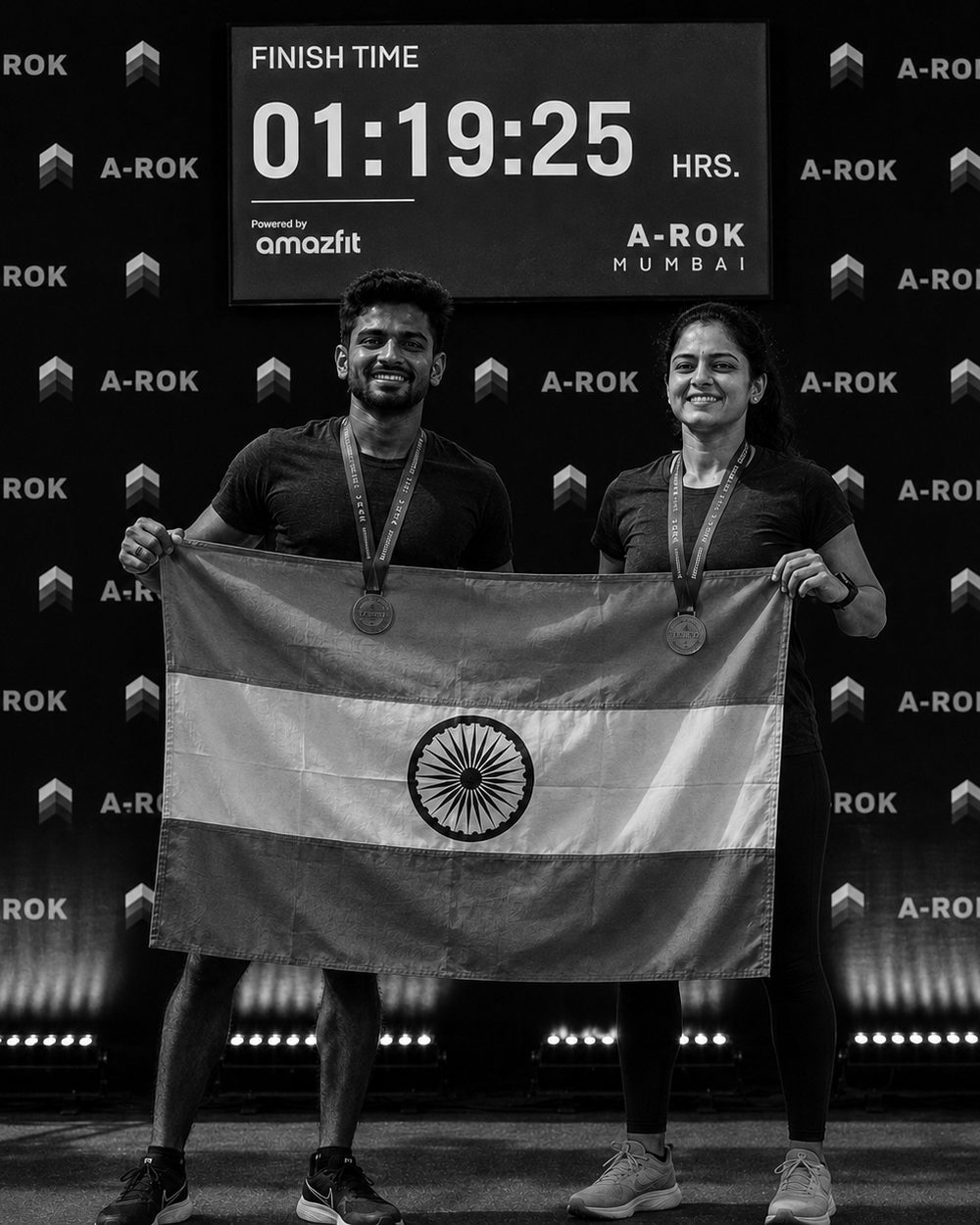
Two athletes, one clock. Both run every kilometre; stations are split however you choose between you. Any pairing, any combination.

2 athletesSplit stations

Relay

Four athletes take two segments each. The most common first entry for people who are certain they cannot do this. They can.

4 athletes2 segments each

Adaptive

Seated, ambulant, visually impaired and neurodivergent categories, each with published equivalence standards. Same course, same board, same medal — ranked in its own category, never as a footnote to another.

Equal standing4 categories

Masters

Five-year age bands from 40 upward, with no upper limit. Our oldest recorded finisher is 79.

40+5-yr bands

Youth

Ages 12–17 on a scaled 4 km course with reduced loads. Free entry at every event, everywhere, with no exceptions and no paperwork beyond consent.

12–17Always free
03 — Training

How people actually prepare

You do not need a specialist gym, a coach, or equipment you don't own. The majority of A-ROK members train with running, bodyweight work, and whatever their chapter has access to.

Phase 01

Build the engine

Three runs a week, one of them long and slow. Everything in this format is downstream of your ability to keep running after your legs are tired. Nothing else you do matters as much.

Phase 02

Learn the transitions

The clock is won and lost in the ninety seconds after you come off a station. Practise moving straight from work back into a run — most people lose more time here than anywhere on the course.

Phase 03

Compromise your running

Run 1 km. Do 50 wall balls. Run 1 km again. That second kilometre is the whole event in miniature, and it's the single most useful session you can do.

Phase 04

Turn up on Saturday

Your chapter session is the training plan. It's free, it's supervised, and it is the same eight stations you'll meet on race day. Consistency beats programming.

Get the training guide

A 12-week plan built for people with no equipment and no background in this. Free PDF, no account needed, in eleven languages.

We email about training and events in your region. Unsubscribe in one click.

Put it into practice

Reading it is easy.
Saturday is the hard part.

There is a chapter near you running this exact session on Saturday. Turn up once and the format stops being a document.